


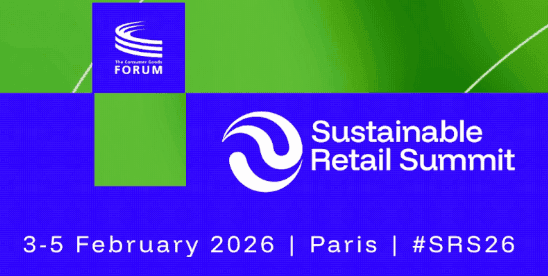
Consumer Goods Forum Sustainable Retail Summit 2026
COMPANY ANNOUNCEMENT
February 13, 2026

Mar Velasco
Mar Velasco
·
Co-Founder

Grace Lam
Grace Lam
·
Co-Founder


At this year’s Sustainable Retail Summit hosted by The Consumer Goods Forum, we had the opportunity to lead a workshop titled Leveraging AI for Packaging Supply Chain Optimization. The session brought together sustainability leaders, packaging engineers, procurement teams, and supply chain executives who are all navigating the same reality: packaging has become significantly more complex, regulated, and financially material than it was even a few years ago.
For those who were able to join us, thank you for the thoughtful discussion and active participation. For those who were not in the room, here is a summary of the core themes we explored and why they matter for organizations across the consumer goods ecosystem.

At this year’s Sustainable Retail Summit hosted by The Consumer Goods Forum, we had the opportunity to lead a workshop titled Leveraging AI for Packaging Supply Chain Optimization. The session brought together sustainability leaders, packaging engineers, procurement teams, and supply chain executives who are all navigating the same reality: packaging has become significantly more complex, regulated, and financially material than it was even a few years ago.
For those who were able to join us, thank you for the thoughtful discussion and active participation. For those who were not in the room, here is a summary of the core themes we explored and why they matter for organizations across the consumer goods ecosystem.

Insights: Packaging is an increasingly complex and regulated part of the supply chain
One of the clearest messages from the workshop was that packaging has shifted from being primarily a sustainability initiative to becoming a core business mandate. Rising raw material costs and environmental fees are directly compressing margins, often by several percentage points. At the same time, more than 50 countries are implementing or expanding Extended Producer Responsibility frameworks, while PFAS restrictions, recyclability criteria, and labeling rules continue to evolve across jurisdictions.
These changes are not harmonized. Requirements differ by state, by country, by material type, and by product format. As a result, packaging decisions that were once driven mainly by cost and functionality must now account for regulatory exposure, fee structures, and circularity targets simultaneously.
In parallel, the underlying data required to make informed packaging decisions remains fragmented. Material specifications sit with suppliers. SKU data lives in ERP systems. Sustainability metrics are tracked in separate tools. Regulatory guidance is often buried in PDFs or managed through consultants. Few organizations have a unified view that connects a specific SKU to its materials, jurisdictions, regulatory obligations, and cost implications. Without that integration layer, most decisions remain reactive.
Pulse check: What we heard from the room
During the session, we conducted a live pulse check to better understand how teams are currently managing packaging complexity. The responses were remarkably consistent across both workshops.
The biggest challenge, by far, is balancing sustainability and circularity goals with cost and functional requirements. Teams understand the strategic importance of improving recyclability or reducing material usage, but they are under pressure to protect margins and maintain product performance.
Many participants shared that keeping up with rapidly evolving regulations, including EPR and PFAS restrictions, is a constant strain. While organizations aim to be proactive, most described their approach as only “somewhat proactive” and still heavily manual.
Data remains fragmented across materials, suppliers, SKUs, and regulations, forcing teams to make siloed decisions without a unified view of cost and risk. Very few teams operate with true portfolio-wide, scenario-driven decision models.
The aspiration to be strategic is there. The infrastructure to support it is still catching up.
Hands-on simulation: Optimizing product packaging with Neta's AI agent
In the second half of the workshop, we ran a live packaging simulation to demonstrate how a packaging-specific AI agent can be embedded directly into packaging workflows.
Neta AI’s agent can be applied directly to packaging workflows from data ingestion to decision-making, highlighting capabilities such as:
Identify portfolio-wide packaging optimization opportunities based on cost, compliance, and sustainability impact.
Model EPR fees and regulatory exposure before making changes, avoiding surprises post-launch.
Get instant clarity on packaging regulations and SKU compliance through a domain-specific AI agent built for packaging teams.
The broader shift is from static reporting after the fact to real-time decision support embedded upstream in the packaging process.
Summary: An industry at an inflection point
The discussion at the Summit reinforced a broader industry trend. Packaging complexity is accelerating, not slowing down. Environmental fees are becoming financially significant. Regulatory scrutiny is intensifying. Sustainability commitments are becoming more visible to consumers and investors.
In this environment, packaging cannot remain a siloed function. It requires a unified intelligence layer that connects product data, regulatory frameworks, cost structures, and sustainability metrics. Organizations that build this capability will be able to move from reactive compliance toward strategic optimization. Those that do not may find themselves repeatedly responding to new requirements with limited visibility into trade-offs.
How Neta AI can help
At Neta AI, we are focused on turning packaging from a compliance burden into a decision intelligence system. We are currently deploying the platform with Fortune 500 partners and working closely with a small group of design partners to integrate real-world packaging data directly into the product.
Our goal is not to add another dashboard. It is to create an intelligence layer that allows packaging, sustainability, and procurement teams to understand the financial and regulatory implications of their decisions in real time.
The conversations at the CGF Sustainable Retail Summit confirmed that the need for this capability is growing quickly. Packaging is no longer just about materials. It is about margin, risk, and long-term competitiveness.
If your team is navigating EPR rollouts, PFAS restrictions, multi-jurisdiction complexity, or rising packaging costs, we would welcome the opportunity to continue the conversation.
Insights: Packaging is an increasingly complex and regulated part of the supply chain
One of the clearest messages from the workshop was that packaging has shifted from being primarily a sustainability initiative to becoming a core business mandate. Rising raw material costs and environmental fees are directly compressing margins, often by several percentage points. At the same time, more than 50 countries are implementing or expanding Extended Producer Responsibility frameworks, while PFAS restrictions, recyclability criteria, and labeling rules continue to evolve across jurisdictions.
These changes are not harmonized. Requirements differ by state, by country, by material type, and by product format. As a result, packaging decisions that were once driven mainly by cost and functionality must now account for regulatory exposure, fee structures, and circularity targets simultaneously.
In parallel, the underlying data required to make informed packaging decisions remains fragmented. Material specifications sit with suppliers. SKU data lives in ERP systems. Sustainability metrics are tracked in separate tools. Regulatory guidance is often buried in PDFs or managed through consultants. Few organizations have a unified view that connects a specific SKU to its materials, jurisdictions, regulatory obligations, and cost implications. Without that integration layer, most decisions remain reactive.
Pulse check: What we heard from the room
During the session, we conducted a live pulse check to better understand how teams are currently managing packaging complexity. The responses were remarkably consistent across both workshops.
The biggest challenge, by far, is balancing sustainability and circularity goals with cost and functional requirements. Teams understand the strategic importance of improving recyclability or reducing material usage, but they are under pressure to protect margins and maintain product performance.
Many participants shared that keeping up with rapidly evolving regulations, including EPR and PFAS restrictions, is a constant strain. While organizations aim to be proactive, most described their approach as only “somewhat proactive” and still heavily manual.
Data remains fragmented across materials, suppliers, SKUs, and regulations, forcing teams to make siloed decisions without a unified view of cost and risk. Very few teams operate with true portfolio-wide, scenario-driven decision models.
The aspiration to be strategic is there. The infrastructure to support it is still catching up.
Hands-on simulation: Optimizing product packaging with Neta's AI agent
In the second half of the workshop, we ran a live packaging simulation to demonstrate how a packaging-specific AI agent can be embedded directly into packaging workflows.
Neta AI’s agent can be applied directly to packaging workflows from data ingestion to decision-making, highlighting capabilities such as:
Identify portfolio-wide packaging optimization opportunities based on cost, compliance, and sustainability impact.
Model EPR fees and regulatory exposure before making changes, avoiding surprises post-launch.
Get instant clarity on packaging regulations and SKU compliance through a domain-specific AI agent built for packaging teams.
The broader shift is from static reporting after the fact to real-time decision support embedded upstream in the packaging process.
Summary: An industry at an inflection point
The discussion at the Summit reinforced a broader industry trend. Packaging complexity is accelerating, not slowing down. Environmental fees are becoming financially significant. Regulatory scrutiny is intensifying. Sustainability commitments are becoming more visible to consumers and investors.
In this environment, packaging cannot remain a siloed function. It requires a unified intelligence layer that connects product data, regulatory frameworks, cost structures, and sustainability metrics. Organizations that build this capability will be able to move from reactive compliance toward strategic optimization. Those that do not may find themselves repeatedly responding to new requirements with limited visibility into trade-offs.
How Neta AI can help
At Neta AI, we are focused on turning packaging from a compliance burden into a decision intelligence system. We are currently deploying the platform with Fortune 500 partners and working closely with a small group of design partners to integrate real-world packaging data directly into the product.
Our goal is not to add another dashboard. It is to create an intelligence layer that allows packaging, sustainability, and procurement teams to understand the financial and regulatory implications of their decisions in real time.
The conversations at the CGF Sustainable Retail Summit confirmed that the need for this capability is growing quickly. Packaging is no longer just about materials. It is about margin, risk, and long-term competitiveness.
If your team is navigating EPR rollouts, PFAS restrictions, multi-jurisdiction complexity, or rising packaging costs, we would welcome the opportunity to continue the conversation.
Insights: Packaging is an increasingly complex and regulated part of the supply chain
One of the clearest messages from the workshop was that packaging has shifted from being primarily a sustainability initiative to becoming a core business mandate. Rising raw material costs and environmental fees are directly compressing margins, often by several percentage points. At the same time, more than 50 countries are implementing or expanding Extended Producer Responsibility frameworks, while PFAS restrictions, recyclability criteria, and labeling rules continue to evolve across jurisdictions.
These changes are not harmonized. Requirements differ by state, by country, by material type, and by product format. As a result, packaging decisions that were once driven mainly by cost and functionality must now account for regulatory exposure, fee structures, and circularity targets simultaneously.
In parallel, the underlying data required to make informed packaging decisions remains fragmented. Material specifications sit with suppliers. SKU data lives in ERP systems. Sustainability metrics are tracked in separate tools. Regulatory guidance is often buried in PDFs or managed through consultants. Few organizations have a unified view that connects a specific SKU to its materials, jurisdictions, regulatory obligations, and cost implications. Without that integration layer, most decisions remain reactive.
Pulse check: What we heard from the room
During the session, we conducted a live pulse check to better understand how teams are currently managing packaging complexity. The responses were remarkably consistent across both workshops.
The biggest challenge, by far, is balancing sustainability and circularity goals with cost and functional requirements. Teams understand the strategic importance of improving recyclability or reducing material usage, but they are under pressure to protect margins and maintain product performance.
Many participants shared that keeping up with rapidly evolving regulations, including EPR and PFAS restrictions, is a constant strain. While organizations aim to be proactive, most described their approach as only “somewhat proactive” and still heavily manual.
Data remains fragmented across materials, suppliers, SKUs, and regulations, forcing teams to make siloed decisions without a unified view of cost and risk. Very few teams operate with true portfolio-wide, scenario-driven decision models.
The aspiration to be strategic is there. The infrastructure to support it is still catching up.
Hands-on simulation: Optimizing product packaging with Neta's AI agent
In the second half of the workshop, we ran a live packaging simulation to demonstrate how a packaging-specific AI agent can be embedded directly into packaging workflows.
Neta AI’s agent can be applied directly to packaging workflows from data ingestion to decision-making, highlighting capabilities such as:
Identify portfolio-wide packaging optimization opportunities based on cost, compliance, and sustainability impact.
Model EPR fees and regulatory exposure before making changes, avoiding surprises post-launch.
Get instant clarity on packaging regulations and SKU compliance through a domain-specific AI agent built for packaging teams.
The broader shift is from static reporting after the fact to real-time decision support embedded upstream in the packaging process.
Summary: An industry at an inflection point
The discussion at the Summit reinforced a broader industry trend. Packaging complexity is accelerating, not slowing down. Environmental fees are becoming financially significant. Regulatory scrutiny is intensifying. Sustainability commitments are becoming more visible to consumers and investors.
In this environment, packaging cannot remain a siloed function. It requires a unified intelligence layer that connects product data, regulatory frameworks, cost structures, and sustainability metrics. Organizations that build this capability will be able to move from reactive compliance toward strategic optimization. Those that do not may find themselves repeatedly responding to new requirements with limited visibility into trade-offs.
How Neta AI can help
At Neta AI, we are focused on turning packaging from a compliance burden into a decision intelligence system. We are currently deploying the platform with Fortune 500 partners and working closely with a small group of design partners to integrate real-world packaging data directly into the product.
Our goal is not to add another dashboard. It is to create an intelligence layer that allows packaging, sustainability, and procurement teams to understand the financial and regulatory implications of their decisions in real time.
The conversations at the CGF Sustainable Retail Summit confirmed that the need for this capability is growing quickly. Packaging is no longer just about materials. It is about margin, risk, and long-term competitiveness.
If your team is navigating EPR rollouts, PFAS restrictions, multi-jurisdiction complexity, or rising packaging costs, we would welcome the opportunity to continue the conversation.
Since you made it this far, why not sign up for our newsletter?

Make smarter
packaging decisions
See how we can cut your time spent on packaging compliance and data tracking by half

Make smarter
packaging decisions
See how we can cut your time spent on packaging compliance and data tracking by half

Make smarter
packaging decisions
See how we can cut your time spent on packaging compliance and data tracking by half


